Tatum's Tales: Cameron
Welcome to Tatum’s Tales
Tatum’s Tales is a special place where we share the beautiful stories of children living with rare genetic diseases, syndromes, and other extraordinary challenges.
Parents submit their child’s story, and in return, I have the joy of photographing their little one during a complimentary mini session. These stories are more than just words — they’re powerful reminders of strength, love, and resilience.
I’d love for you to take a moment to read their stories, leave kind and uplifting comments to show your support, and share them on your Facebook or Instagram so even more people can be touched by these amazing children and their families.
If you’re new here, I invite you to start at the beginning and read Parts 1, 2, and 3 of Tatum’s Tales: https://www.sarahthompsonprice.com/tatums-tales-1/
Meet Cameron!
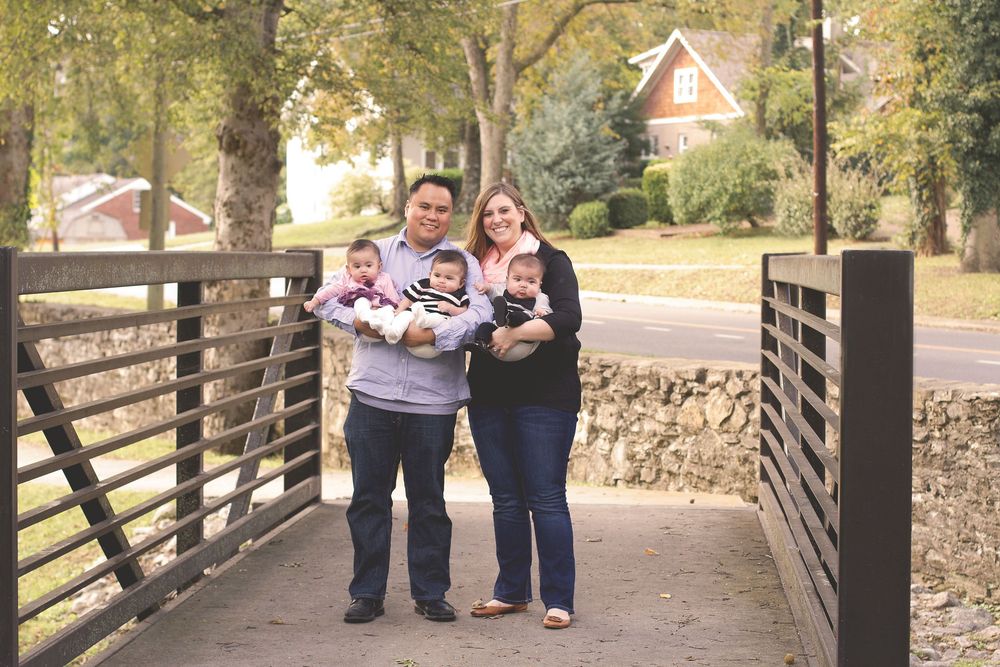
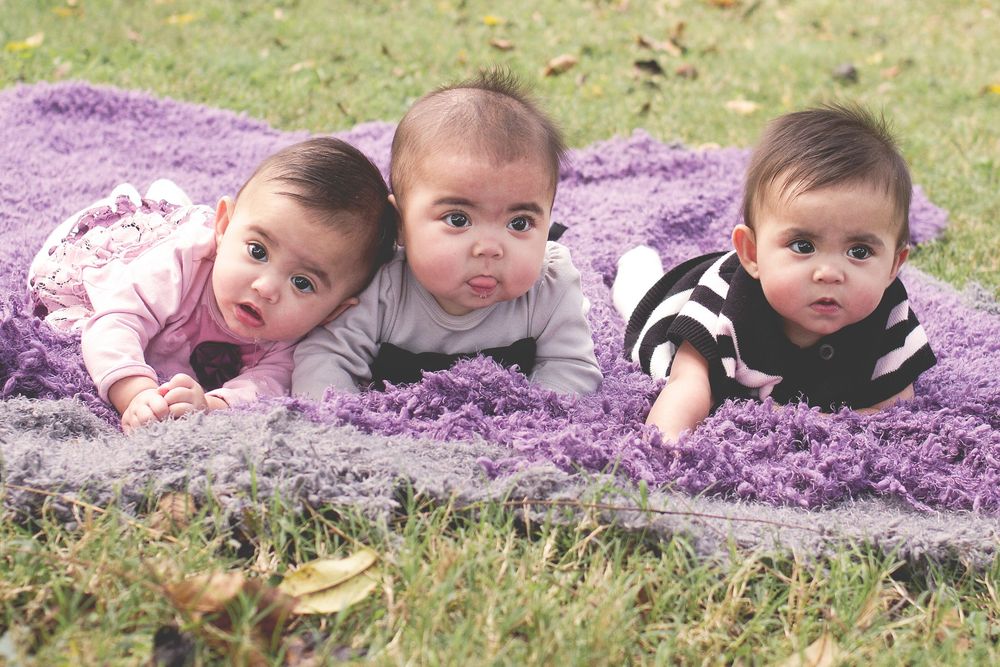
Cameron is a triplet!
I first met Cameron and her sisters through a mutual friend who referred them to me for their newborn photos. Over the course of several photo sessions, I gradually learned about each girl’s unique health challenges. Their strength and resilience left a deep impression on me.
I was truly touched when their mom took the time to write out each of the girls’ stories so I could share them here. I’m so excited to finally share their beautiful photos along with their stories.
They are such a sweet, loving family, and I feel honored to tell their story. I hope you’ll take a moment to read Cameron’s journey, keep her and her family in your prayers, and share her story with everyone you know.






Cameron's Story
As I sat down to write the last of these blog entries, I realize that my mind always goes to the definition of normal. The definition of normal is as follows: “conforming to a standard, usual, typical or expected.” My continued mention of what normalcy is is certainly not to suggest that I don’t absolutely embrace and adore our abnormalcy, it is to simply say that we forget what normal is more often than not. Normal is not triplets, and it is certainly not triplets with special needs or medical issues.
Our daughter Cameron came fighting into this world at a whopping 2 pounds, 3 ounces. From the very beginning, Cameron had a mind of her own, she was not going to do anything until she was ready. The nurses in the NICU always joked that she would rule the roost once we got home, but do it in a way that was unexpected. They were not wrong! We knew from the start that her sweetness could simultaneously melt any heart and trick that same heart at the very same time.
While Cameron’s heart is pure sweetness, it has also been the source of stress. As is very common among micro-preemies, Cameron was born with a PDA (Patent
Ductus Arteriosus). It is an opening in the heart that typically closes shortly after birth. We learned early on that Cameron’s PDA was fairly large and that she would need a medication to help close it. After multiple doses of the medicine and very little progress, the medicine started affecting her kidneys so we had to stop administering it. The doctors were confident that it would eventually close over time, even without the medicine. We continued our NICU journey, hoping for a smooth stay of simply growing and learning to feed.
The sounds of the NICU – the beeps, the alarms, the dings – had all become second nature to us at that point. Bradycardia (slowing down of the heartbeat) and Apnea (oxygen levels fall and the baby stops breathing) are common occurrences in the NICU and while they never stop being scary, as a parent, they do become second nature. You learn how to nudge the baby to bring them back to. It was always nerve-racking but after a certain point, it was also second nature.
Until it wasn’t.
Perhaps the scariest moment of my life occurred a few short days before Cameron was to be discharged. One of my cousins came to visit the girls and me at the hospital and we were marveling over how cute Cameron’s outfit was. The preemie-sized white with a small blue print footie pajama was still big on her, but it was my absolute favorite on her. It wasn’t that alarming when Cameron’s alarm started going off. At this point in her NICU stay, the bradys had slowed down significantly and she had learned to resolve them on her own so when this one wasn’t resolved quickly, it was concerning. As I nudged her harder and harder, the alarms just seemed to get louder and faster. It was probably no longer than a minute. Even now, it still feels like everything was in slow motion as I screamed for a nurse and I watched my perfect little girl turn blue. I remember the nurse flying past me and bagging/masking Cameron to give her some oxygen. After what felt like forever, she came to and I was able to hold her. I stayed an extra five hours that day and would not put her down. While this event increased her stay in the NICU by another week, it also led to more tests and an eventual diagnosis of Pulmonary Stenosis. Pulmonary Stenosis is the narrowing of the pulmonary valve, which means that the valve has to work extra hard to pump blood to the lungs and the rest of the body. In a healthy heart, the valve closes quickly to stop any blood or air from backflowing to the heart. Because of the narrowing present with Pulmonary Stenosis, there is often the presence of backflow, which can have a severe impact on the heart.
We were then sent to a pediatric cardiologist where we learned that Cameron would need a heart catheterization with balloon valvuloplasty. Fortunately, this was not an open heart surgery, but rather a procedure where a catheter with a small inflatable balloon at its tip is inserted into the groin and threaded up to the pulmonary valve. The balloon is then inflated, which helps open up the valve. To say we were scared to see our 4-pound baby being rolled away for surgery would be an understatement. We waited with baited breath as the surgeon worked his magic. The procedure went well and Cameron’s severe stenosis was downgraded to mild after the procedure. To this day, I’m not sure we could ever find the words to truly thank the doctor and his team for saving our daughter’s life.
Unfortunately, within 2 years post procedure, Cameron’s diagnosis has been upgraded to moderate as some of the backflow has come back. At this point, her cardiologist sees no reason for action until it becomes severe again. Her chances of needing a complete valve replacement are high, but we, along with her doctors, are hopeful that it won’t need to happen until she’s an older teenager or adult. At her age, a replacement is still too risky given the amount of growth that Cameron still has in front of her. Often the child can outgrow the implanted valve far before the valve has worn out, so we remain hopeful that her condition stays moderate. Her cardiologist is a part of a stellar team that is leading the way in pediatric cardiology. He feels confident that by the time Cameron needs a replacement, it will not be an open heart surgery, as the eventual advancements in nanotechnology could one day make it an outpatient procedure. While this blows our minds, we know she’s in the right hands. We know what to look out for and we know to relax when she gets a little out of breath. Most importantly, we know that she’s a thriving and healthy five year old girl who still has a heart of gold. And still knows how to use it against you.